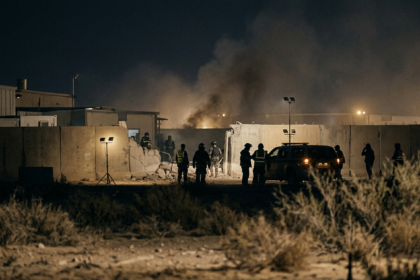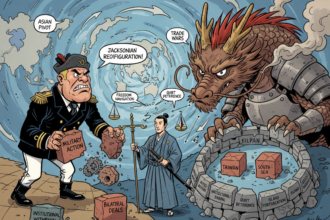



War begins with a story
War doesn’t begin with gunfire.
It begins with a story.
“We’re defending ourselves.”
“They attacked first.”
“This is a fight for justice.”
When repeated, these narratives reshape how people perceive reality.
This is where narrative bias comes in.
Because reality is too complex to grasp directly, we turn it into stories.
And within those stories, we place ourselves — or our nation — as the protagonist.
It brings coherence. It brings comfort.
But it also distorts the truth.
The source of a story shapes how people think
Narrative bias changes depending on where the story originates.
Is it designed by a collective — institutions, media, civil society?
Or by a single leader?
The difference matters.
In 1941, after the attack on Pearl Harbor, U.S. President Franklin D. Roosevelt said:
“Yesterday, December 7th, 1941 — a date which will live in infamy — the United States of America was suddenly and deliberately attacked…”
This narrative called for unity and defense of shared values.
It emphasized freedom, justice, and the restoration of peace.
It was echoed across institutions, debated publicly, and allowed for multiple interpretations.
Here, narrative bias functioned as a device for voluntary empathy.
In contrast, on February 24th, 2022, Russian President Vladimir Putin said:
“The purpose of this operation is to protect people who have been subjected to abuse and genocide… to demilitarize and denazify Ukraine.”
This narrative justified war as defense.
It was centralized, repeated without dissent, and used to mobilize loyalty.
Alternative narratives were suppressed.
Here, narrative bias became a psychological tool for control and mobilization.
Same war, different stories, different realities
This difference in narrative structure deeply affects how people perceive war.
One side repeats:
“Heroes defending the homeland.”
“Standing against external threats.”
The other side reinforces:
“Supporting freedom and order.”
“Resisting authoritarian aggression.”
Even when watching the same war, people see different things.
Because the structure of the story shapes what they’re allowed to see.
Narrative bias makes people trust the story more than the facts.
Footage and testimony are dismissed as propaganda.
Only information that fits the story is accepted.
In this state, dialogue collapses.
Because the other person’s reality exists outside your narrative.
Only those who translate stories can design resilient relationships
Stopping war requires more than weapons.
It requires translators of narrative.
Not translators of language — but of structure.
The kind who ask:
“Why does this person believe that story?”
“What history or fear shaped it?”
For example:
When someone says “freedom is the highest value,”
they may be speaking from a history where dignity was denied.
When someone says “order is the foundation of peace,”
they may be speaking from a memory of collapse.
So:
- “Freedom” may look like chaos to someone else.
- “Strength” may feel like safety — or domination.
- “Control” may feel like oppression — or necessary structure.
If we don’t understand these differences, relationships break.
But if we ask where the story came from, we begin to see its architecture.
We also realize our own story was shaped — by education, history, media, and culture.
To translate a story is not to accept it.
It’s to understand the structure behind it.
And to find a place where two stories can meet — without collapsing.
Who designed the story you believe?
That’s why we must ask:
“Who designed the story I believe?”
“What am I trusting — and what am I missing?”
“How can I relate to someone whose story contradicts mine?”
These are not abstract questions.
They are directly connected to the war in Ukraine.
This war is not just about territory.
It is a collision of narratives.
“Defense or invasion.”
“Freedom or order.”
“Justice or deception.”
Each story shapes perception, emotion, and action.
And each is rooted in a different source — with different consequences.
That’s why we must translate.
We must question our own story.
We must understand the structure of the other.
Only then can we speak from outside the war.
Only then can we design relationships that don’t break.
And only then can we build a language that holds — even when the world fractures.