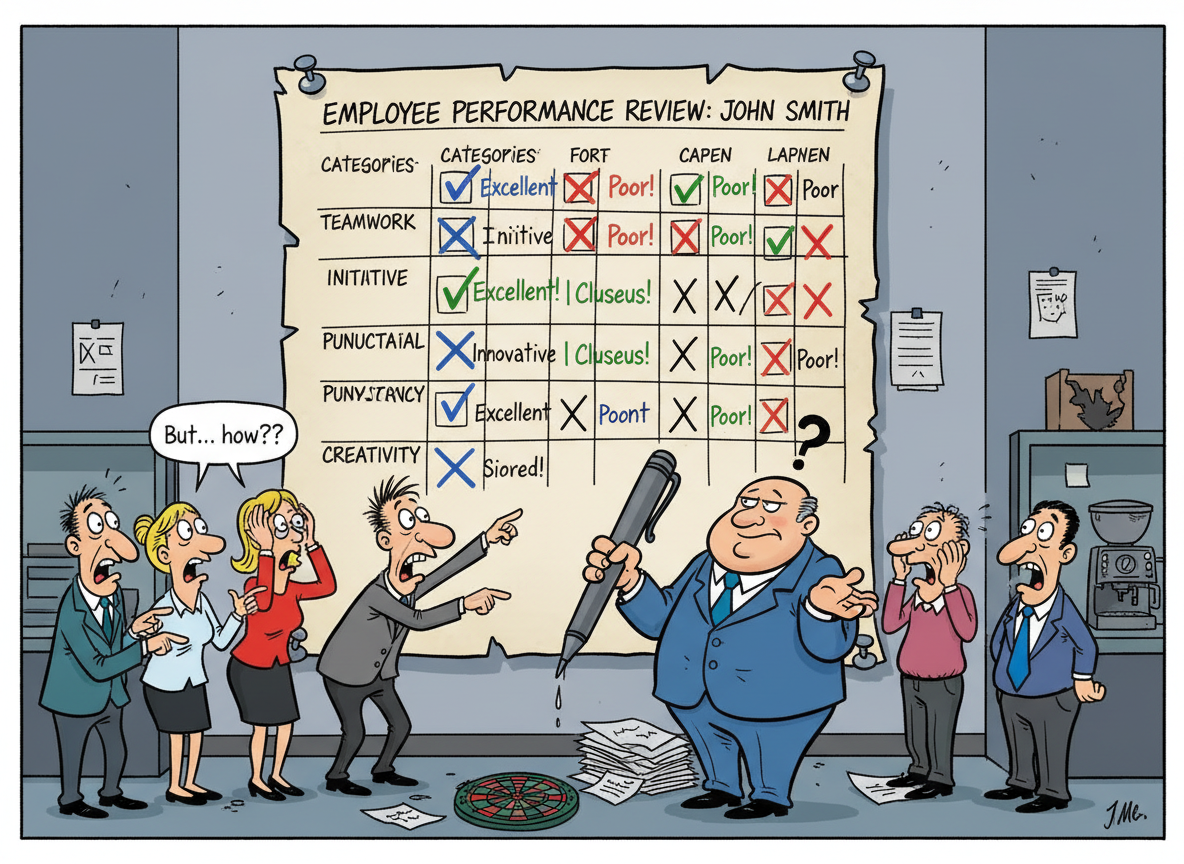



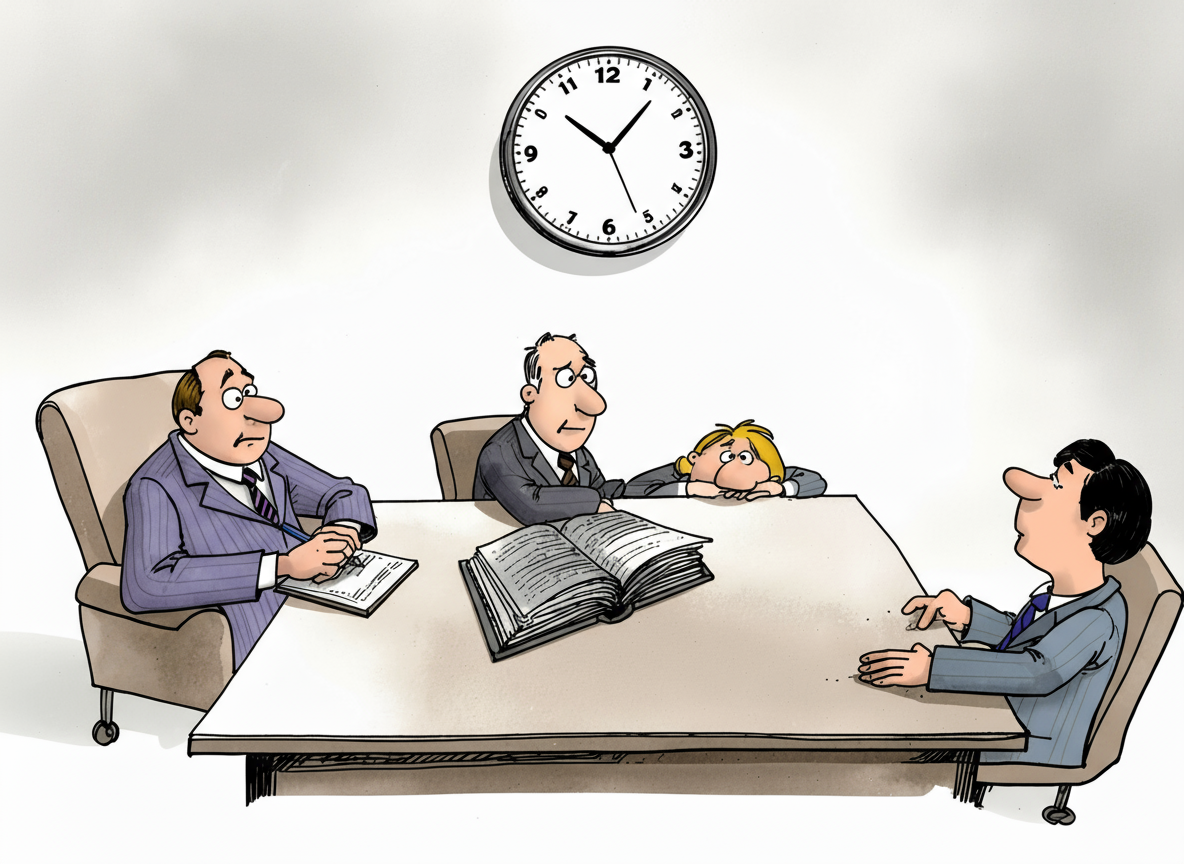
The Starting Point of Discomfort: “It’s Just How Things Are Done Here”
In many organizations, certain phrases are used to shut down questions:
“This is standard professional behavior.”
“You’re expected to know this.”
“It’s just how things are done here.”
These phrases may sound harmless, even efficient.
But when repeated without context, they become tools of silence.
They signal that rules are to be followed, not understood.
And when rules lose their meaning, they become hollow.
Structure starts to collapse — not because rules are wrong, but because no one knows why they exist anymore.
When Manuals Lose Their Meaning: The Danger of Ritual Without Reason
Every rule, every gesture, every protocol has a reason.
But when we teach only the form, and not the meaning, we create rituals without roots.
Take a simple example from service etiquette: how hands are positioned during a bow.
- Left hand over right:
In traditional Japanese etiquette, this signals “no hostility.”
The right hand is the dominant hand — used to draw a weapon.
Covering it with the left shows peaceful intent. - Right hand over left:
In some contexts, this suggests readiness to assist.
It’s common in medical or hospitality settings, where quick action is valued.
But when these gestures are taught without meaning, they become distorted.
People mimic the shape, but forget the message.
Eventually, the gesture itself loses coherence — and becomes just another hollow rule.
This isn’t limited to etiquette.
Any rule taught without its structural logic becomes a game of broken telephone.
When Time Isn’t Respected, Structure Begins to Fracture
These aren’t just behavioral issues.
They’re signs of structural misalignment.
“Late to meetings.”
“No one follows the 5-minute rule.”
“Start times are flexible, but deadlines are strict.”
In organizations where time isn’t respected:
- Meetings don’t start on time
- Agendas are rushed or skipped
- Those who arrive early feel punished
- A silent consensus forms: “No one really cares”
This isn’t about punctuality.
It’s about trust, coordination, and shared expectations.
Time Discipline Is a Structural Design Problem
You can’t fix time issues with reminders alone.
You need structural interventions that shape behavior.
Examples include:
- Embedding a “5 minutes early” norm into onboarding and team rituals
- Assigning timekeepers with authority to start and stop meetings
- Requiring latecomers to review minutes or follow-up actions
These aren’t punishments.
They’re design elements that reinforce shared responsibility.
When time is respected, coordination improves — and trust follows.
When Managers Stop Thinking, Organizations Stop Moving
Rules without meaning.
Instructions without context.
Decisions without explanation.
These are signs that managers have stopped thinking structurally.
Instead of asking:
“Why does this rule exist?”
“What behavior are we trying to shape?”
“Where is friction emerging?”
They default to:
“Just follow the manual.”
“Do what I say.”
“Don’t ask questions.”
This creates a culture of compliance without clarity.
And in such cultures, initiative dies.
Before the Rule: Designing Structures That Move People
Strategy isn’t just about goals.
It’s about designing structures that move people.
Rules are part of that structure.
But they must be rooted in meaning, context, and shared understanding.
To rebuild structure, we must:
- Articulate the “why” behind each rule
- Create spaces for shared interpretation
- Walk alongside managers as they relearn how to think structurally
The starting point can be anything — a new policy, a project, a conversation.
What matters is that structural dialogue begins.
Recovering the Capacity to Think Structurally
Following rules isn’t wrong.
But following them without understanding is dangerous.
If your organization feels hollow — if rules are ignored, misunderstood, or resented —
it may be time to revisit the structure beneath them.
And if you’re unsure where to begin, perhaps the first step is to ask:
“What’s the rule before the rule?”