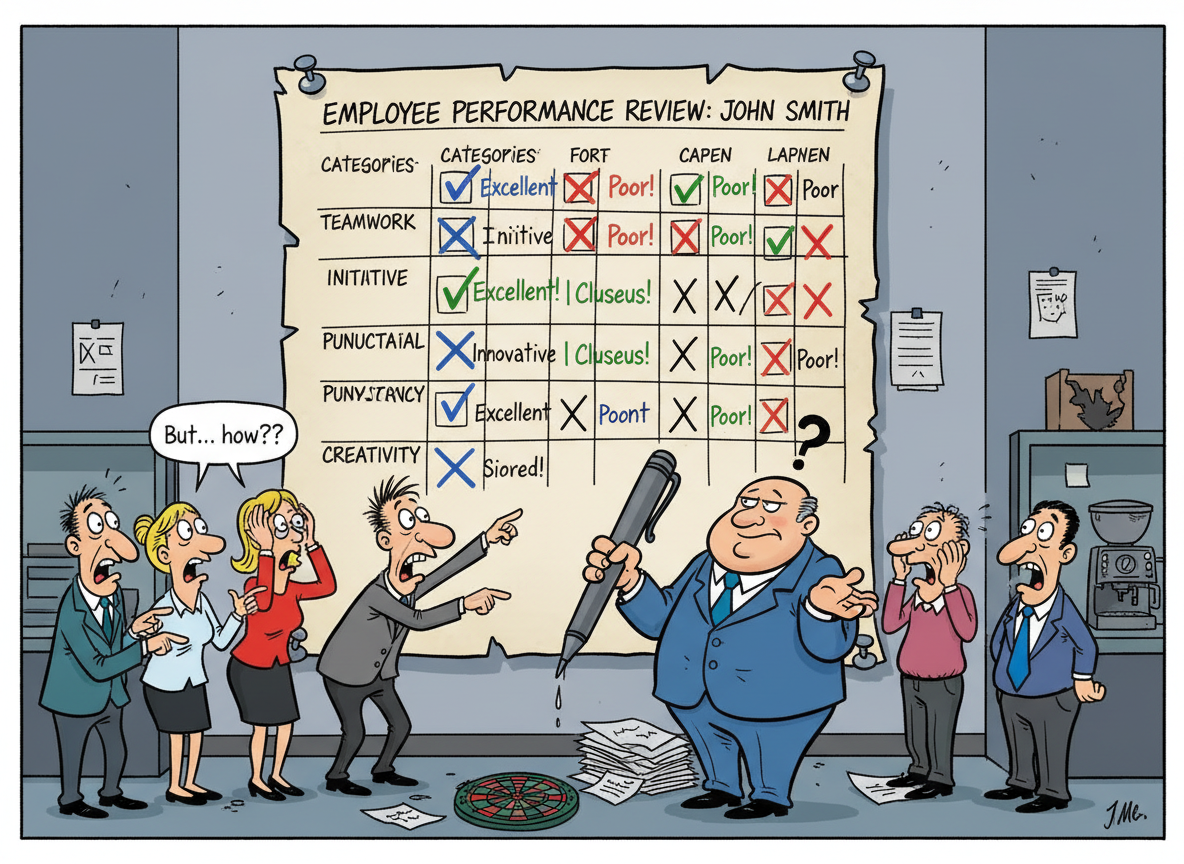



A moment from the workplace
“What do you think is causing the lack of communication?”
A manager in his 50s asked this to a subordinate in his 40s.
After a brief pause, the subordinate replied:
“I think I need to be more mindful of when to consult with my manager and report more frequently.”
The air responded before the words did.
Tension filled the room.
And I thought—this tension itself might be the structure that prevents dialogue from happening.
Was that response honest—or just a search for the “right” answer?
At first glance, the subordinate’s reply seems constructive.
But beneath it may lie anxiety about being evaluated, a pressure to say the “right thing,” and a subtle imbalance in the relationship.
What unfolded wasn’t a failure of dialogue—it was a failure of design.
Data reveals the structure of dialogue breakdown
According to a 2024 survey by Persol Research Institute:
- 51.2% of respondents said they could not speak honestly in one-on-one meetings with their managers
- 52.1% said they rarely speak honestly in team meetings
- 50.8% said they have no one at work they can speak honestly with
- There’s a significant gap in perception between roles
- General employees often feel they can’t speak freely, while upper management tends to believe honest dialogue is happening
Source: Persol Research Institute | Quantitative Survey on Workplace Dialogue
In short, having a “dialogue space” doesn’t guarantee psychological safety.
And often, those in leadership aren’t aware that dialogue isn’t actually happening.
How to prevent these kinds of responses from emerging
When a subordinate responds with self-blame, it’s often a sign of deeper structural tension.
To prevent this, we need to rethink how dialogue is designed.
🧩 Adjust the temperature of the question
Instead of asking, “Why didn’t communication happen?”
Try: “When did you feel it was easy to approach me recently?”
A warmer question changes the emotional climate of the relationship.
🧩 Avoid creating an atmosphere of “right answers”
When a subordinate starts searching for the “correct” response, the manager’s question may be functioning as an evaluation.
Shifting to a design-oriented question—like “What kind of timing makes it easier to consult?”—opens the space for real dialogue.
Applying this to organizational design
By decoding these structural patterns, I help organizations build environments where dialogue happens naturally—tailored to each company’s culture and people.
Temperature of questions, relational design, invisible pressures—
When these are thoughtfully adjusted, consultation becomes a structural outcome, not just a behavioral hope.
This is the kind of design I believe modern management needs.
In your organization,when someone responds by searching for the “right” answer—what kind of question is being asked?