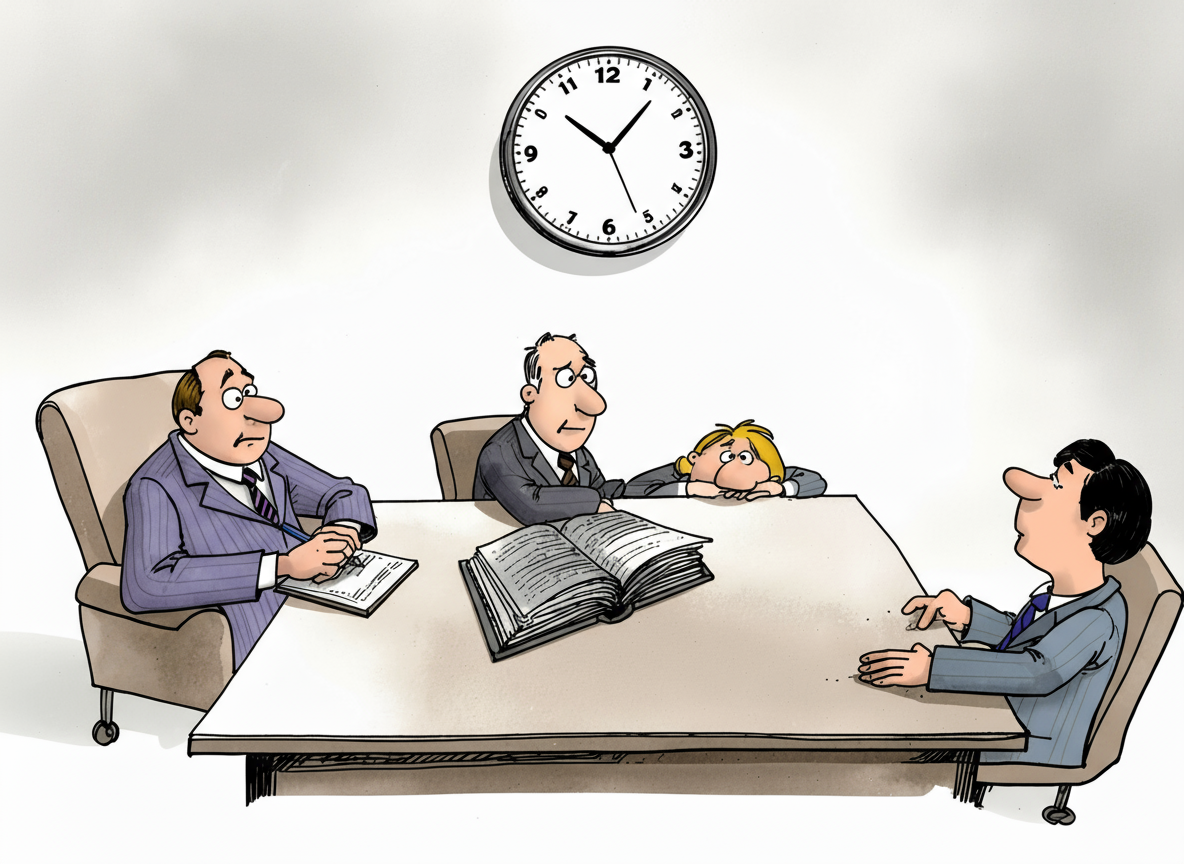




Living in an Era Where No One Wants to Be a Leader
Once, a leader was someone who led —
who gave orders, maintained control, and moved organizations forward.
That image still lives on in many workplaces.
And even now, the assumption remains:
to be a leader is to bear responsibility.
But younger generations are avoiding promotion.
They refuse to take on that weight.
It’s not laziness.
It’s a rupture in meaning.
The Evolution of Marketing and the Shifting Image of Leadership
In the early 20th century, the Industrial Revolution enabled mass production.
Companies entered an era of “make it and it will sell.”
Marketing was product-centric — version 1.0.
Customers were passive recipients.
Efficiency and control were prized.
Leaders functioned like factory extensions: commanding and managing.
As markets matured, differentiation became essential.
Marketing evolved into version 2.0.
Companies had to respond to customer needs.
General Motors introduced full-line strategies and brand management.
Leaders became coordinators — connecting departments and designing customer touchpoints.
Later, marketing entered versions 3.0 to 5.0, emphasizing values, empathy, and humanity.
Just as marketing shifted from product to personhood,
leadership too is being reexamined.
The Need to Redefine Leadership
Today, the old image of leadership no longer holds organizations together.
The reality on the ground proves it.
Young people avoid management roles because leadership still means “command and responsibility.”
If this continues, no one will want to lead — or even be promoted.
For younger generations to aspire to leadership,
we must reweave the image and meaning of the word itself.
The Leaders We Need Now — Meaning Weavers, Structural Catalysts
In many organizations, the image of leadership remains frozen in the past.
Here’s the kind of leadership I believe this era calls for:
- When silence fills a meeting, someone who can name what’s missing
- When younger members feel anxious, someone who can design a space where voices are safe
- When direction feels uncertain, someone who can clarify what truly matters
Do you know someone like this in your workplace?
Or could you be that person?
And if so, in what moments would your presence reshape the structure?
Leadership is not about giving orders.
It’s about weaving meaning and cultivating trust.
Not a commander,
but someone who reads the situation, articulates meaning,
and guides others toward shared understanding.
In an Age of Information Overload, Leaders Become Translators of Meaning
The internet has exploded our choices.
Today’s youth value not just “where they work,”
but “what they carry” and “what meaning it holds.”
Organizations, too, can no longer move through control alone.
They require spaces of resonance, clarity, and shared purpose.
Not Leadership Training, but Structural Redesign
To cultivate leaders in this era is not to teach the art of command.
It is to support the journey of reweaving meaning in one’s own words.
And this support is not only for the team member —
it redesigns the manager as well.
Through these questions,
team members discover the roles and structures they wish to carry.
Managers develop the ability to translate meaning.
This is not about growing the next leader.
It’s about growing the structure itself.
Questions like:
“Where is this team flowing smoothly, and where is it stuck?”
“In what kinds of situations does your strength come alive?”
“Who did this action resonate with, and how?”
These questions reshape not only the team,
but the manager who asks them.
The one who weaves questions,
weaves structure.
That may be the true essence of leadership development in our time.
Weaving Structure
Leadership is not about issuing commands.
It is about reading the moment, articulating meaning,
and guiding others toward shared movement.
To embed that definition into society —
that is the structure we are called to carry.