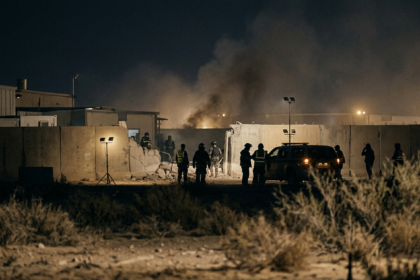



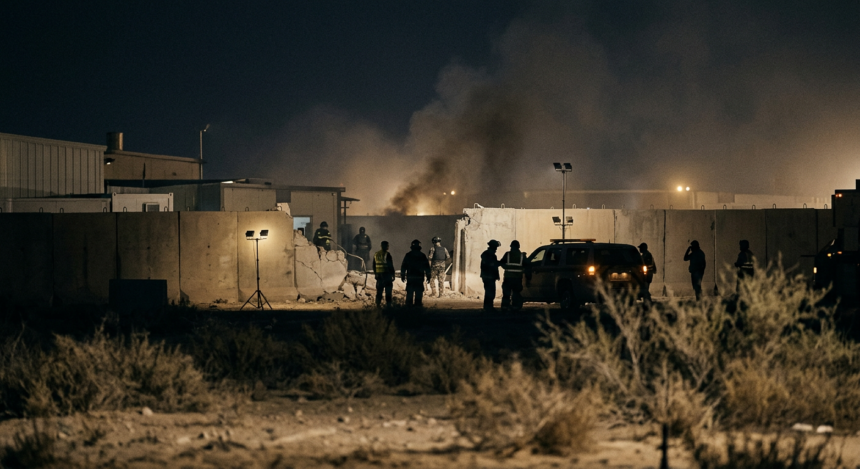
The late‑February 2026 strike on multiple sites inside Iran—carried out by the United States and Israel—was immediately followed by Tehran’s announcement of Supreme Leader Ali Khamenei’s death. While the event appeared to be part of the long‑running nuclear standoff, the implications extend far beyond the nuclear file.
Iran’s nuclear program, sanctions, regional networks, and oil supply are all embedded in a broader geopolitical structure shaped by the United States, China, and Russia. Understanding the strike requires looking at how these three powers interact around a state whose internal political system is remarkably resistant to external pressure.
Iran’s regime has historically been difficult to dislodge. The legacy of the 1953 coup, the ideological foundations of the 1979 revolution, and the deep entrenchment of the Islamic Revolutionary Guard Corps (IRGC) have created a system that absorbs shocks rather than collapses under them. This rigidity matters: when the internal structure does not move, the external balance of power often does.
The 2026 strike is better understood as a structural move within the U.S.–China–Russia triangle. A weakened but intact Iran increases U.S. leverage in the Middle East and global energy markets. China faces new uncertainty in its energy strategy as discounted Iranian oil becomes less reliable. Russia, dependent on Iranian drones and regional coordination, risks losing influence in the Middle East.
Iran’s internal politics remain static, but the geopolitical environment around it is shifting. The strike marks a moment when great‑power competition, rather than nuclear negotiations alone, defines the trajectory of the region.
👉 The full article is available exclusively to Medium.
Read more here:
How the Strike on Iran Reshapes the U.S.–China–Russia Power Dynamic