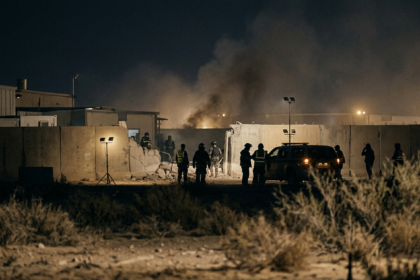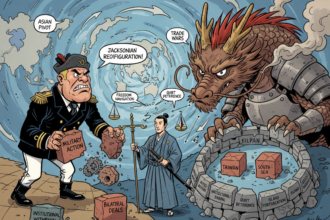



War is not a clash of religions. It is a collision of orders, a rupture between memories. Ukraine stands atop such a rupture — a fault line between land power and sea power, between Eastern Orthodoxy and Western Catholicism, between Russian and Ukrainian language. All of these boundaries converge within the structure of a single nation.
The Structure of Borders — Geopolitics and Imperial Memory
Geopolitically, Ukraine has long been treated as a “buffer zone.” To Russia, it is a protective wall against the West; to NATO, a gateway to the East. But the concept of a buffer zone carries a dangerous implication: it reduces the people who live there — their cultures, beliefs, and languages — to strategic abstractions. Their identities are treated as part of the terrain, not as sovereign subjects. Their dignity as people disappears into the logic of maps. They should be bridge-builders between worlds. Yet in reality, they are often pushed outside the boundaries altogether.
Western Ukraine reflects the legacy of Poland and the Austro-Hungarian Empire: Catholicism, Ukrainian language, and European values. Eastern Ukraine bears the imprint of the Russian Empire and the Soviet Union: Orthodoxy, Russian-speaking communities, and imperial memory. This “one country, two cultures” structure means that multiple orders coexist within a single state. The seeds of conflict were embedded from the very beginning.
Religion and the State — The Third Rome and the Performance of Order
After the fall of Byzantium, Russian Orthodoxy cultivated the idea that Moscow was the rightful heir to the Orthodox world — known as the “Third Rome” doctrine. It fused religion with state power, offering the Putin regime a tool to claim both moral and territorial legitimacy. During the annexation of Crimea, Putin declared he was “reclaiming the sacred land of Kyivan Rus.” This was not just political rhetoric — it was a sanctification of geopolitical restructuring.
When the Ukrainian Orthodox Church declared independence from the Russian Orthodox Church, it struck a symbolic blow to Moscow’s spiritual authority. Kyiv, the origin of Eastern Slavic Christianity, was asserting its own identity. This was not merely a religious schism. It was part of a broader redefinition — where nationhood, faith, and cultural memory intersect to reshape the architecture of order.
The Structure of Schism — Why Religious Orders Split
Christianity split into Eastern and Western churches in 1054. Islam divided into Sunni and Shia branches shortly after the death of the Prophet Muhammad. Religious orders have always carried within them the potential for division — not just over belief, but over the design of order itself. This logic applies not only to religion, but to nations. Ukraine is a state formed by stitching together regions once ruled by different empires. Its religions, languages, and structural philosophies differ. Multiple orders coexist within its borders. Conflict was not an accident — it was structurally inevitable.
To recognize differences in faith is not merely an act of tolerance. It is a form of structural intelligence — an ability to accept the plurality of order.
Breaking with the Past to Weave the Future
If we accept this structure, then Russia’s annexation of parts of Eastern Ukraine can be seen not just as aggression, but as a redivision of order — a historical recurrence. Russia has long declared Ukraine’s NATO membership a “red line.” To Moscow, NATO expansion means the erasure of imperial boundaries. But as the war drags on, and sanctions isolate Russia, that red line begins to fade.
Now, having annexed parts of Eastern Ukraine as its “new reality,” Russia may accept Ukraine’s NATO membership in exchange for retaining some territory. For Ukraine, this is a painful compromise. It loses land, but gains security and integration with the West. Economic recovery will depend on support from the EU, G7, and IMF — especially in agriculture, mineral resources, and infrastructure.
This is not defeat. It is a structural exchange — where conflicting orders acknowledge their limits and begin to rewrite the future together. When those who live on the borderlines begin to weave their own order, the war may finally end.